Share book on
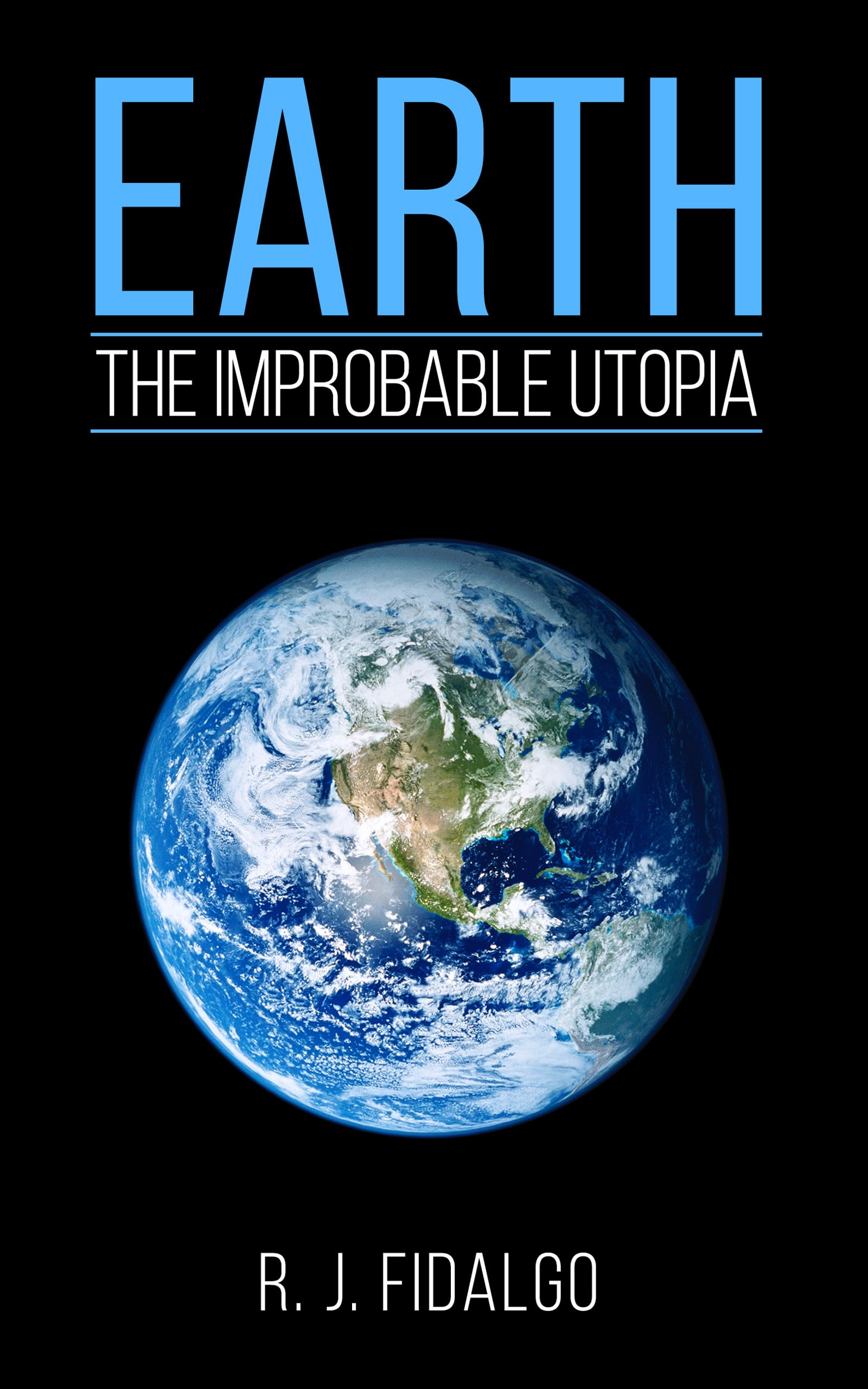
Earth, The Improbable Utopia (Living Consciousness Series Book 2)
by R. J. Fidalgo
Summary
Earth, The Improbable Utopia by R. J. Fidalgo offers a spiritually grounded vision of humanity’s future—one rooted not in fantasy, but in conscious transformation. Blending reflective insight with global observation, the book explores cultures, beliefs, and systems through the lens of inner awakening and collective responsibility. Neither a manifesto nor a doctrine, this contemplative work invites readers to reconsider despair, reimagine progress, and recognize that the path to a better world...
From our reviewers
"Earth, The Improbable Utopia" by R. J. Fidalgo is a book that makes you stop and think (it seriously makes you think) and then continue again. The title of the book, "Earth, The Improbable Utopia," caught my attention first. I was interested to learn what the author's thought process for a better future looked like. Let me tell you in short. It's ambitious, for lack of a better word, thought-provoking, and definitely makes you think hard on the mess we're in and have created (spoiler alert). The author writes pretty much everything on this earth that holds a bit of grain, like governance, environmental challenges, migration, etc, etc. The view is impressive, and you can tell the author genuinely cares about these issues. There are even some moments where you will find yourself agreeing with the author, while others make your head scratch. You can feel the author's passion through his words, and it sweeps you in its tide. This book has the power to alter your worldview, even if you do not agree with some of its points. A utopian Earth is possible (which the book mentions pretty extensively), but it is far-fetched. However, even if the book is fantastic at recognizing problems, it is kind of light on actual solutions. Like, okay, we know things are broken... but what do we DO about it with the humans and resources we have right now? I wanted practical steps or realistic plans, but mostly got philosophical judgments instead. Dreaming of a perfect Earth is pleasing, but we need tangible steps to make it happen. Also, the book needs another round of editing. There are a few grammatical mistakes throughout the book. Nothing major, but enough that you notice. A better edit would have really helped the book and made the flow smoother. But I really did enjoy reading the book overall. The ideas in the book are brave and ambitious. I would recommend this book to readers or people who are into philosophy, big-picture thinking, social critique, and making the world better. I would rate the book 3 out of 5 stars. It is worth checking out for a different viewpoint, but be prepared to fill in some blanks yourself!
by Rashmi AgrawalThe Improbable Utopia This book is an ambitious attempt to re-imagine our world as an ideal, utopian society. It explores a wide range of ideologies including Christianity, Islam, and Hinduismpresenting both their strengths and shortcomings. Alongside these discussions, the book raises a central question: Is a utopia truly possible? The author suggests that while it may be extremely difficult to achieve, it is not entirely impossible. There were several points in the book that I found compelling, and others I respectfully disagreed with. One idea that resonated with me was the author's reflection that there are both good and bad people in the world, but because the bad ones stay with us emotionally, we begin to believe that everyone is bad. I found this to be a deeply honest and insightful observation about human perception. Reflection However, I disagreed with the authors view on music. He argues that music should remain an important part of society and recommends listening to melodies that uplift the soul and bring peace. While I understand and appreciate his perspective, I personally believe that music, in any form, can become a form of mental captivity and may hinder rather than enhance clarity and discipline. Reflection The authors writing style is engaging, though at times philosophical and dense, which demands the readers full focus and reflection. In conclusion, The Improbable Utopia is a valuable read for anyone who genuinely seeks to build a better world. It challenges you to reflect not just on society, but on your own beliefs, values, and behaviors. True change begins with the individual and this book powerfully reminds us that creating a better world starts from within.
by Waniya KhanThe Improbable Utopia This book is an ambitious attempt to re-imagine our world as an ideal, utopian society. It explores a wide range of ideologies including Christianity, Islam, and Hinduismpresenting both their strengths and shortcomings. Alongside these discussions, the book raises a central question: Is a utopia truly possible? The author suggests that while it may be extremely difficult to achieve, it is not entirely impossible. There were several points in the book that I found compelling, and others I respectfully disagreed with. One idea that resonated with me was the author's reflection that there are both good and bad people in the world, but because the bad ones stay with us emotionally, we begin to believe that everyone is bad. I found this to be a deeply honest and insightful observation about human perception. Reflection However, I disagreed with the authors view on music. He argues that music should remain an important part of society and recommends listening to melodies that uplift the soul and bring peace. While I understand and appreciate his perspective, I personally believe that music, in any form, can become a form of mental captivity and may hinder rather than enhance clarity and discipline. Reflection The authors writing style is engaging, though at times philosophical and dense, which demands the readers full focus and reflection. In conclusion, The Improbable Utopia is a valuable read for anyone who genuinely seeks to build a better world. It challenges you to reflect not just on society, but on your own beliefs, values, and behaviors. True change begins with the individual and this book powerfully reminds us that creating a better world starts from within.
by Waniya KhanThe truth is , the world is what we make itand unfortunately, we havent made it a very nice place, R.J. Fidalgo writes in his book, Earth: The Improbable Utopia. This begs the question: Is it possible to have Heaven on Earth? To live peacefully, free of diseases and other lifes challenges? To achieve utopia? Fidalgo shares his thoughts here, thoroughly exploring the issues that have led us to our current situation and what needs to be done to make the most out of life. One important takeaway is that making the world a better place requires a global effort. Fidalgo terms it the global endeavor. I havent yet read Fidalgo's other books, but his way of thinking, especially as best captured here, portrays a writer with much to give when it comes to discussion on the worlds topical issues. He identifies the things Id consider the pillars of earth, notably law, religion, culture, and science, and delves into them further, giving the readers clear examples of how these pillars could be used for mankinds benefit. Japans respect for law and cultural practices is worth admiring and proves integral to turning the earth into a nice, happy place. The food we eat and the technologies we interact with are also significant. The books language is much appreciated, definitely one of the books highlights. Fidalgo uses simple words instead of jargon and difficult vocabulary. Right from the start, the reader gets the invite, all thanks to Fidalgos friendly and forthright approach. The books main agenda and how to achieve it are clearly defined earlier on. Is it possible to make Earth a better place ? This is one question to be answered only by the reader, as Fidalgo does not impose his opinion, but makes the reading interactive so that the reader sees and analyzes things for themselves. For readers of non-fiction that weigh into positivity and life in general, this book is highly informative.
by kennedy OdindoEarth: The Improbable Utopia by R. J. Figaldo happens to be an immersive, interesting book like no other. As the book title suggests, a well-thought-out world, if I could say so myself, the author thinks of a perfect world that is unlikely to happen. For the world to get to utopia, everything the author mentions should be a global endeavor, working together to instill change. He creates strong points on the topics such as our culture, tradition, money, inequality, and other topics people regard as taboo or a sore point for others. I loved reading this book. He even gives a detailed blueprint on how to go about achieving the perfect earth. It was awesome envisioning this kind of world with the author through his descriptive writing, bringing to life a world that feels out of reach. In a world full of greed, fear, and desire, who will accept that they should not manipulate resources for their own benefit? He talks of being aware that we are in each others service, but we forget not everyones heart is in a good place. A world like this would be lovely, where everyone is kind and considerate to everyone, but it seems far out of reach unless this book ends up in the right hands. Till then, it will remain an improbable utopia. I would highly recommend it to anyone craving a better future.
by Agnes Odek"Earth, the Improbable Utopia," authored by R. J. Fidalgo, is an enlightening exploration of the journey of humanity toward a brighter future. This compelling analysis delves into our origins, the influences that shape our lives, our potential destinies, and most importantly, the vision of paradise on Earth. Fidalgo artfully balances realism with optimism, guiding readers through the common truths found within various religions, cultural traditions, and governmental approaches to global challenges, as well as the transformative role of artificial intelligence in our world. The author delivers an uplifting message: futureof humanity hinges on one pivotal decision, choosing to embrace love and understanding over self centeredness. Through a nuanced examination of our challenges, Fidalgo provides practical steps forward while maintaining a hopeful perspective on our collective abilities. This thought provoking journey encourages readers to redefine sacrifice, emphasizing the importance of helping others, accepting responsibility for our actions, and practicing genuine forgiveness. This book is not merely a refuge for dreamers; it serves as a call to action for individuals ready to explore meaningful change. It offers a rich blend of thought, challenge, and encouragement that inspires readers to envision a world improved by their choices. "Earth, the Improbable Utopia" invites everyone to reflect on their role in shaping a harmonious future, presenting a vivid picture of what could be achieved through unity and compassion. For anyone eager to grasp the limitless possibilities before us, this book is a profound and exciting read, providing invaluable insights for transforming Earth into the utopia within our reach. I give it a four star rating
by OMOKINIOVO OMOJEVWEEarth, The Improbable Utopia by R. J. Fidalgo is a book that addresses societys positive and negative view of attaining Heaven on Earth. The book is full of information that was intriguing to learn. It gives the seven cycles of evolution and defines them in great detail. I was unaware that Awakening begins with movement and the first expression of life in something akin to bacteria. This book was an eye-opening learning experience. I do agree with Fidalgos expression of how the legal system is putting a band-aid on a festering wound or cutting off the diseased part without resolving the underlying problem. The authors admiration of Japanese culture is made evident by the historical growth of Japan. What stood out the most was the Japanese work ethic and the emphasis on the Samurai beliefs of loyalty, discipline, and honor being continued in modern culture. I was impressed by the detailed description of the composition of pure water. The book describes the color, taste, and measurements used to make sure there is nothing harmful in the water. It definitely made me skeptical of what comes out of my water faucet at home. Fidalgo offers his opinion of his process for change. I liked his suggestion of meeting human needs for free and banning smoking and polygamy. I found that some of his processes were contradictory. No competitions, which means that sports should be eliminated, contradict the fact that people should exercise. Many people play sports as a form of exercise. Vegetarianism often leads to lowered iron levels requiring a supplement, a fact I know from my own experience. I also disagreed with the ban of pets. I live in a rural area and communicate with my dogs on a daily basis. Their affection and loyalty surpass what most humans provide. The section on artificial intelligence was fascinating. The guiding laws sound practical for AI technology. They are plausible solutions that I can picture. I do not think making an AI machine can understand human emotions because everyone expresses themselves in multiple ways. What I feel about a tragic event might be different from what another person feels. I was discouraged by the need for another round of editing needed in Earth: The Improbable Utopia. I also found the authors suggestion about how the government could be improved sounded a lot like socialism. It is a proven fact that socialism does not work. For example, look at Venezuela's living conditions for their people. Interfering with someone's desire for children seems like an invasion of privacy and excessive government control. Overall, I found this book offers good information and is self-reflective. Readers who are interested in ideas of what would make the Earth a better place will find this book appealing. I think young adults who advocate for environmental preservation and acknowledge climate change may also find it enjoyable. I personally give this book a four-star rating. Even though I disagree with several of the authors opinions, they do make excellent ideas for discussion with others.
by Stephanie RunyonEarth: The Improbable Utopia by R. J. Fidalgo is a strong book that challenges the reader to consider the way the world functions and how it can be so much better. The author illustrates profound concepts in a clear manner. It also responds to the big questions about life, society, and truth. All the elements found in it are natural and smooth. It takes readers through the beginning to the end. It also discusses our battles with care, and it reminds us that we can change everything as long as we can cooperate. One of the lessons I learned is that the way to build a better world begins with knowing ourselves and pursuing love instead of fear. The writing style of the author is understandable, reflective, and intentional. The rhythm is even and allows the readers to reflect. This book is for all those who prefer to ponder over the future, human values, and means to introduce peace and understanding to the world. It is also fantastic for both teens and adults. The book is uplifting at a time when the world can be a pretty divisive place. It makes the readers comprehend that utopia may not be achievable, but it is worth aiming for. It is a book that makes you want to do something and believe in something more. I would definitely recommend checking it out.
by Rahmani IbrahimEarth, The Improbable Utopia by R. J. Fidalgo is a reflective and optimistic book on what occurs when individuals embrace understanding, unity, and change rather than fear and division. The author gives a step-by-step exposition of every notion and demonstrates that despite the world, which seems to be shattered, there is still hope and harmony to be found by joining efforts and contemplating. The book is profound and readable, and I would say that every chapter is a new step of knowledge and leads to the picture of a new, better life for all people. It is a powerful and positive message that change is difficult but not impossible, as long as everyone is involved. The book is evenly paced and reflective, and the text is written well. The tone, which the author employs, is quite calm and respectful, and it suits the message that is conveyed. The font, font size, and format are clear and readable. It is comfortable and inviting visually. The descriptions are simple yet powerful and interesting. The author does make everything straightforward and sincere as well. The selected point of view is suitable because it gives the reader the sense of being part of a true dialogue of life, choice, and the future. There was nothing in the book that was too difficult to accept; everything is believable. It will be ideal for both teenagers and young adults as well as adults. I highly recommend this work to anyone who wants to be challenged, inspired, and motivated to do positive things.
by Gladys NakoteSearch Our Book Library
Processing...