Share book on
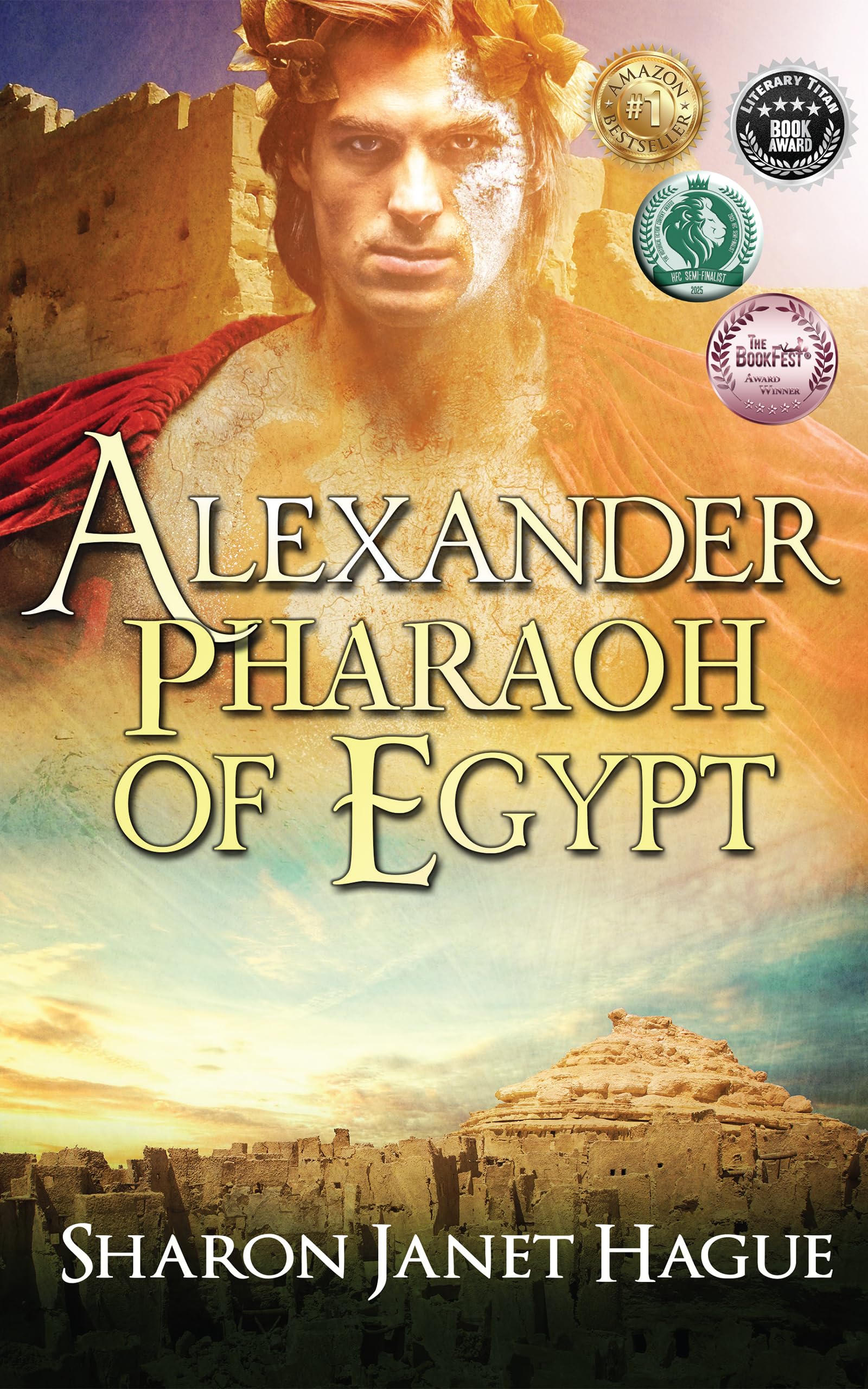
Alexander, Pharaoh of Egypt (Ancient Egypt)
by Sharon Janet Hague
Summary
Alexander III of Macedonia believes in his divine destiny. A golden child tutored by Aristotle while demonstrating qualities of leadership and brilliance, the sixteen-year-old heir rises quickly to prominence with a crushing victory over the Greeks. But when his father is assassinated, Alexander ascends the throne and sets his eye on conquest and godhood.Surrounding himself with his band of childhood friends and allies, the young king swiftly blazes a vicious path through the East. And though wa...
From our reviewers
Sharon Janet Hague's "Alexander, Pharaoh of Egypt"explores the fascinating and transformative period when Alexander the Great, one of history's most celebrated conquerors, became intertwined with Egypt's rich cultural and political history. The book seamlessly blends historical facts with fictional storytelling to provide a vivid account of Alexander's time in Egypt and his enduring legacy. The narrative follows Alexander's rise to power, beginning with his succession to the Macedonian throne after the assassination of his father, King Philip of Macedonia. Driven by an insatiable desire for conquest and greatness, Alexander embarks on a series of military campaigns that take him across Europe and Asia. His journey brings him to Egypt, where the local population, discontent under Persian rule, welcomes him as a liberator. In a strategic and symbolic move, Alexander is declared Pharaoh of Egypt, a title that aligns him with the divine rulers of ancient Egypt and strengthens his hold on the region. This moment serves as a turning point, not just for Egypt, but also for Alexander's personal and political ambitions. The book delves deeply into Alexander's complex personality, portraying him as a man of contradictionsboth merciful and ruthless, disciplined and indulgent. His actions are driven by a dual desire: to expand his empire and to achieve god-like status, a theme that underpins much of his life and legacy. His acceptance of the title of Pharaoh symbolizes his efforts to bridge Greek and Egyptian cultures, setting the foundation for a legacy that would influence civilizations for centuries. Hague also examines the myths and legends surrounding Alexander, from the prophetic omens at his birth to the various interpretations of his life and rule across cultures. The narrative highlights how Alexander's legacy is viewed through different lenses, from the admiration of Western traditions to the complex and sometimes critical perspectives in Persian accounts. At its core, "Alexander, Pharaoh of Egypt" is a richly detailed exploration of ambition, cultural integration, and the blurred lines between myth and reality. Sharon Janet Hague masterfully captures the essence of Alexander's character while providing a vivid backdrop of the ancient world. Through her blend of historical accuracy and compelling storytelling, the book offers readers a nuanced understanding of Alexander's time in Egypt and his lasting impact on history. This book is not just a historical account but also a reflection on the complexities of leadership and legacy, making it a captivating read for those interested in history, mythology, and human ambition.
by Ayomide AkinfolarinSharon Janet Hague's "Alexander, Pharaoh of Egypt"explores the fascinating and transformative period when Alexander the Great, one of history's most celebrated conquerors, became intertwined with Egypt's rich cultural and political history. The book seamlessly blends historical facts with fictional storytelling to provide a vivid account of Alexander's time in Egypt and his enduring legacy. The narrative follows Alexander's rise to power, beginning with his succession to the Macedonian throne after the assassination of his father, King Philip of Macedonia. Driven by an insatiable desire for conquest and greatness, Alexander embarks on a series of military campaigns that take him across Europe and Asia. His journey brings him to Egypt, where the local population, discontent under Persian rule, welcomes him as a liberator. In a strategic and symbolic move, Alexander is declared Pharaoh of Egypt, a title that aligns him with the divine rulers of ancient Egypt and strengthens his hold on the region. This moment serves as a turning point, not just for Egypt, but also for Alexander's personal and political ambitions. The book delves deeply into Alexander's complex personality, portraying him as a man of contradictionsboth merciful and ruthless, disciplined and indulgent. His actions are driven by a dual desire: to expand his empire and to achieve god-like status, a theme that underpins much of his life and legacy. His acceptance of the title of Pharaoh symbolizes his efforts to bridge Greek and Egyptian cultures, setting the foundation for a legacy that would influence civilizations for centuries. Hague also examines the myths and legends surrounding Alexander, from the prophetic omens at his birth to the various interpretations of his life and rule across cultures. The narrative highlights how Alexander's legacy is viewed through different lenses, from the admiration of Western traditions to the complex and sometimes critical perspectives in Persian accounts. At its core, "Alexander, Pharaoh of Egypt" is a richly detailed exploration of ambition, cultural integration, and the blurred lines between myth and reality. Sharon Janet Hague masterfully captures the essence of Alexander's character while providing a vivid backdrop of the ancient world. Through her blend of historical accuracy and compelling storytelling, the book offers readers a nuanced understanding of Alexander's time in Egypt and his lasting impact on history. This book is not just a historical account but also a reflection on the complexities of leadership and legacy, making it a captivating read for those interested in history, mythology, and human ambition.
by Ayomide AkinfolarinAlexander, Pharaoh of Egypt Ancient Egypt by Sharon Hague is a historical fiction narrative that deeply explores and reimagines the life of Alexander the Great during his conquest and rule over Egypt. She blends historical research with creative storytelling, giving us a glimpse into ancient Egypt's political, cultural, and spiritual landscape. One of the most compelling aspects of Alexanders reign in Egypt was his transition from mere military conqueror to divine ruler and exploring themes of leadership, religious legitimacy, and the blending of Greek and Egyptian cultures. The author meticulously researches her subjects, ensuring historical accuracy while allowing room for engaging storytelling in the book, which is informative and dramatic, with vivid descriptions of ancient Egyptian landscapes, rituals, and political intrigues. I give the book five out of five stars because the character development is excellent. The characters are consistently developed without neglecting the presence of active characters. It is a long read, but it is a deeply researched and engaging read. It demands a high level of detailing and concentration to fully grasp internal struggles, the grandeur of ancient Egypt, and the political complexities of his reign; it could become a significant contribution to historical fiction about this era. Thank you, Sharon! I recommend his book to history enthusiasts, readers of historical fiction, and students of political strategy and leadership
by Eniwoghale EkpohSearch Our Book Library
Processing...