Share book on
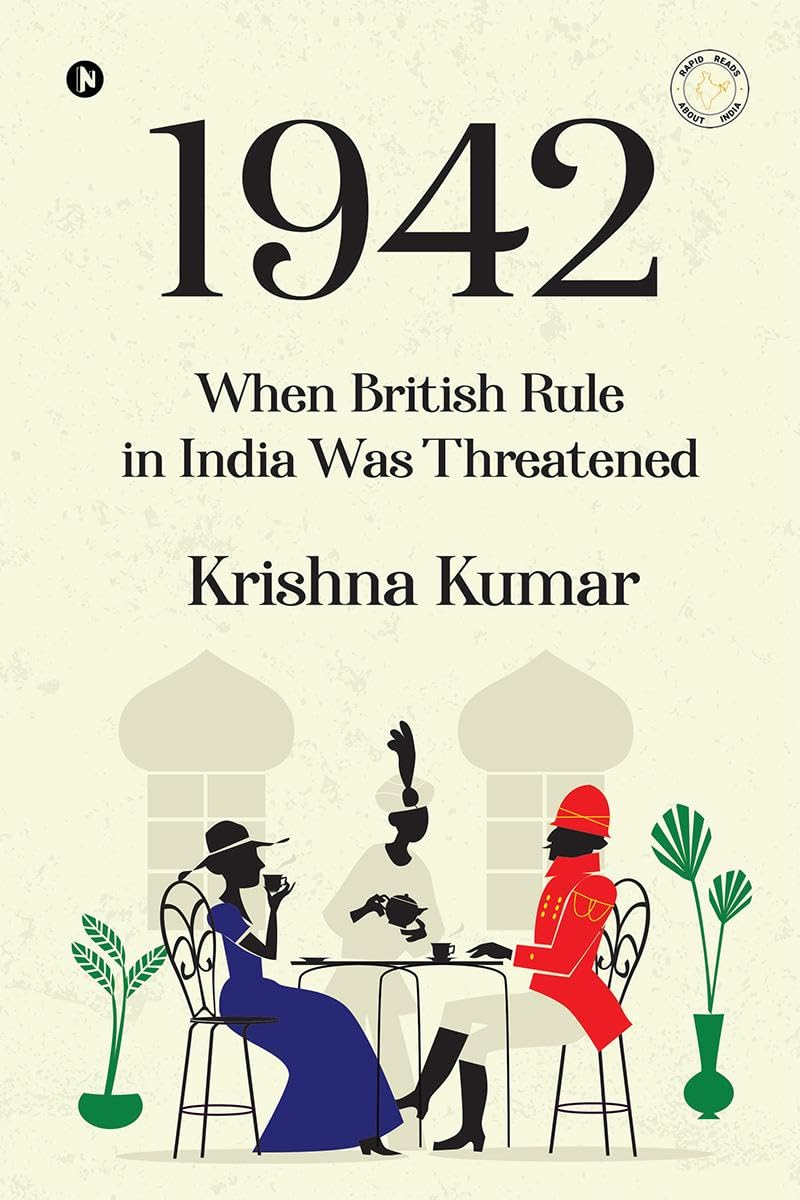
1942: When British Rule in India was Threatened
by Krishna Kumar
Summary
This book provides context, analyzes, and narrates the events of 1942, which shook British Rule of India and eventually led to the collapse of the British Empire.1942: Japanese armies reached the Northeast Borders of India after taking over Burma (Myanmar). Then, the Japanese bombed Madras, Vizag, and Calcutta.Ports on India’s East Coast were closed. Almost 100,000 soldiers of the British Indian Army and 400,000 civilians- disease-ridden and demoralized- came to India from Burma, making a tortuo...
From our reviewers
The road to freedom has to start with a potent realization of suppression. And in 1942: When British rule in India was threatened, Krishna Kumar describes the ardent journey and history of a nation to the journey of freedom. It's the year 1942, and the resistance in India has risen to an alarming crescendo as a result of economic hardship and the ardent drain of India's resources for the benefit of Britain. The Indian nation has reached its peak, and the Second World War seems to have weakened Britain. This gives the Indian people the chance to take back their motherland from British colonialism. The most distinct and interactive part about Kumar's narration about India's struggle in the year 1942 is how it takes the reader to another depiction of the crises away from mainstream narrations. He describes this incident from a standpoint of a son who was associated to a father who was alive and involved in the brutal struggle for India's freedom. The author takes the reader through several incidences from the creeping in of Japan's military artillery close to Indian borders all the way from Singapore to India, the internal struggle within India itself, the stand that Gandhi held for India, the influence of Bose all the way from Germany, the manipulation of the East India Company all the way from Britain even in India, to the political and institutional divide between Muslims and Hindus in India. 1942 is a meticulously researched book. I mostly enjoyed how Kumar took the reader into a totally different perspective of the facts of India's revolutionaries and freedom fighters, especially the light shown on Mahatma Gandhi's dealings pre and post-independence and his dealings with the British. This intricate narrative about British rule in India's 1942 consists of several timelines before the arrival of the British traders, even to the colonialism period. At first, it was a bit hard for me to follow all this, but as the author unraveled each period and event, it finally dawned that 1942, when British rule was a beautifully narrated piece of India's struggle for freedom, and what it still costs it even today in the modern world. For readers who are seeking insight into the history of the British loss of India and the real story behind it, 1942 is a certain non-nuanced read that I will recommend, which will take the reader into the 1900s world of India's struggle for freedom. I received an advance reader copy from the author, and I'm leaving this review voluntarily.
by PRISCILLA LAWALKrishna Kumar's historical non-fiction writing "1942 - When British Rule In India Was Threatened" recalls the sequence of events that occurred in 1942, during the British rule of India. Simultaneously, it leads up to the moment when Britain's rule was ultimately toppled and India regained control as a country. In 1942, India's troops and citizens observed Britain's weakness when Japanese forces overran Asia, defeating British troops in Malaya, Singapore, and Hong Kong. This destroyed the illusion that the British were completely unstoppable and undefeatable. Furthermore, the formation of the Indian National Army inspired and gave hope to India's troops and citizens to rebel against British rule. Overall, this fascinating book pinpoints many significant figures, places and events that contributed to India's sovereignty and the vibrant culture that existed in India during that time, as well as today. If you love historical books, especially on India's history, then this book is a gold mine. There is an abundance of information and details that depict the depth of the author's zeal regarding India's historical progress and potential as a nation. Altogether, this book is well-researched. The author expertly offers a meticulously researched collection of data and insight into India's spirited past. Ultimately, through this book, you will learn about the captivating events that caused the demise of one of the biggest imperial empires known in history. I urge fans of historical non-fictions to get their copy soon.
by Oliva SunditPart of the Rapid Reads book series, Krishna Kumar's, 1942: When British Rule Was Threatened, takes us on a harrowing journey into Britain’s oppressive and brutal ruling of India which lasted for a total of 87 years. Due to the terrible treatment and harsh conditions Indians were forced to work and live under, their quality of life was decreased significantly, with many being exploited and used for cheap labor. In this dark look into India's history, Krishna takes the reader through the different timelines, using sources as proof of what Britain’s greed cost a beautiful, vibrant country, and how stealthy methods were used in order to keep India from regaining her freedom. Krishna is refreshingly straightforward on the subject of British Imperialism and the effect it had on India and also provides startling and concise information about its brutal regime while also laying emphasis on its inhumane treatment of the latter country's inhabitants. What I found especially interesting as well as shocking was Krishna's views on the role Mahatma Gandhi played in the fight for India's freedom. Many discussions of this nature have taken place and as it stands, people still wonder about the peacemaker’s motives. I recommend 1942: When British Rule Was Threatened to those interested in India's history and how her people fought back to regain their power.
by Danelle PetersenI will begin by saying that the author's writing about 1942 in India is masterful. His research is impressive, and the way he explains things is interesting to follow. Bringing in real people and their stories, like Subhas Chandra Bose, makes the history relatable. Also, the author doesn't just stick to the facts but also adds quotes and stories that make the history come alive. The quote: "It was an axiom of the company's policy...India was ruled by force of arms." This quote captures the essence of the British approach to governance during that time. The author also talks about the tough laws the British introduced that affected everyday people in India. Even though there is a lot of information, the author has kept the story moving smoothly. It is not a snoozefest, which is amazing. While reading, I noticed that the formatting of the book needs just a little bit of attention, particularly when it comes to numbering. I think it will actually help readers navigate between chapters easily if it is improved. Additionally, adding enough photographs can also help enhance readers understanding and engagement with the book. That is just my point of view. Above all, if you like learning about history, particularly about India during World War II, you will definitely enjoy this book. It helps broaden your knowledge when it comes to history.
by Gladys NakoteAs Krishna Kumar writes in this history-rich nonfiction, 1942: When British Rule in India was Threatened, New York Times once stated that “British Imperialism would be compelled to evacuate Great Britain itself before it would willingly evacuate India.” The statement emphasizes the British ironclad grip on the colonies during the colonial era, particularly India, raising the question of how Great Britain achieved the status that Kumar refers to as an "aura of invincibility." This book does an excellent job of answering the above question by explaining India's long-buried history under colonization, as well as several internal and external factors that forced Britain to finally leave India. 1942 reveals the foundation on which today's India is built, thanks to Kumar's in-depth research and friendly writing. For many non-Indians, Mahatma Gandhi is perhaps the most remembered figure for sacrificing for a free India. This book changes that as it focuses on the other unsung heroes as well, the men who defied British rule, risked their lives, and were exiled and imprisoned, but stood up, fought, and ultimately freed India. It provides a brief account of men such as Subhas Chandra Bose, who is credited with founding the Indian National Army while in Germany, Lala Lajpat Rai, and many others. Freeing India would have been impossible without external influences, agrees Kumar, and it is commendable that he delves into these external influences here, much to the benefit of the readers; particularly, Japan's attacks on Pearl Harbor and Malaya, her occupation of Burma, and World War II, among others. Furthermore, Kumar emphasizes the important roles the religion played towards liberating India. Readers interested in learning more about India's struggle for independence and factors that precipitated the end of the British rule will find this book very informative.
by kennedy Odindo“The Indian National Army became the slow fuse that exploded the gunpowder of dissent and suppression in ignited the whole of India in ’45-’46 and forced Britain to leave India.” As the title suggests, the book analyzes the last phase (with the root cause analysis) of British rule in India with such details that readers feel captivated. Contextually, the Second World War and British structural discrimination play important roles here. The Garran Award and the Chatfield Committee’s “army-role” descriptions clarify strong suppression and resource exploitation elements. I love how the second and third dents are explored with key points of international politics—especially, the “Samurai Ethos” and the “Bushido code” underrating features of British pride. Descriptions of the 10,000 British army soldiers (Indian) walking through the dense jungle of Assam, too much focus on the North-west and Japanese attack strategies seem like stunning visuals. The author moves back and forth in the timeline to explore the evolution of the East India Company, Colonial tactics, and Indian freedom fighters without overwhelming the readers. I am grateful to learn about General Tomoyuki Yamashita, Major Mohan Singh, the true reason behind the Gadar party’s failed strategy, that Dutch cartographer, Clive’s donkey, “Cash Cow” money draining strategy, Nabobs, power abusing Daroga culture, Wellesley’s strong Mafia vibes, Reeducation program, Dalhousie Doctrine, high tax rate, and religious conversion efforts. I salute that even with the Criminal Tribes Act, and the Sedition Act, the “spirit of freedom” remains like a “violet in a desert”. The true nature of the Khilafat movement and Gandhiji shocks me. However, Netaji, Bhagat Singh, and their “armed revolution” strategies are major keys to free India. This book is a must-read for all those victims of colonialism irrespective of country.
by Sudipta Nandi1942: When British Rule in India Was Threatened by Krishna Kumar is a book that illustrates a specific period during World War II in India. The book speaks of different events in India's struggle for independence. It is an in-depth investigation and assessment of historical events in 1942. From the Japanese incursions into Northeast India to the bombing of key cities like Madras, Vizag, and Calcutta, the author seeks to uncover different perspectives that threatened the British Authority in the region by citing a diverse range of authoritative sources. I loved the book's sentimental ring due to the author's connection to India through family experience. I like how the author aimed to use this book to reveal the truth by bringing different perspectives and accounts of the story of India during World War II. The one aspect of the book that didn't sit right with me was the lack of clear structure and organization in the storyline, along with the abrupt transition in the storyline, which I found quite challenging while reading the book. But outside of all this, the author did an amazing job of offering a clear assessment of these events that happened in India a long time ago. I rate this book 4 out of 5. I will recommend this book to those who are interested in historical books, especially the history of India, specifically the era of British rule in India and the country's struggle for independence.
by Oreva AkpedeThe events and movements that occurred, the significant individuals, organizations, cities, and nations, as well as the discussion of them, are all included in this book about Indian history. An essential part of the book is the author's narration of the army's duty, which was completed officially in 1939. A deeper debate is then had on the army's roles, duties, significance, struggles, and much more. The impact of British control in Southeast Asia is discussed next. Rules are covered, the importance of places like Malaya and Singapore is described, the role played by the Japanese in this movement is primarily underlined, and we are shown how they acquired the faith of the Indian army and embarked on their own adventure. There are multiple references to the events of the Second World War. Winning and losing are crucial to war. The Japanese had a clear strategic goal: to invade Burma at the outset of the war, namely for economic reasons. The British began to lose ground on January 20, 1942, and the British Great Fall officially began. The Japanese bombed India in 1942, and that bombing, together with the reactions and cascades that followed, caused dread and the idea of a fleet; their commander dubbed it "India's Most Dangerous Hour." This argument is backed up by a ton of evidence. A trade system is used to explain the economic component; the Portuguese were the ones who adhered to this system most closely. The primary system was put in place first for financial management and then for regional development, particularly for railroads. The book's last section is devoted to national heroes. The story revolves around the theme of "Do or Die," which demonstrates how desperately these folks had to fight for our freedom. Every little thing is worth praising. I want everyone of you to read the last chapter so you may be grateful and know about our hero's struggles. I give this book a rating of five stars overall. It's a simplified retelling of a tremendous amount of information. A brief synopsis of the book's contents is provided in the review. I refrained from sharing too much since I wanted my fellow readers to experience the narrative's flow and be intrigued by what might come next. In particular, the author's presentation of the Indian Army and the data organization and segregation of material to facilitate reader comprehension were excellent. Along with the flawless editing, the themes, justifications, and storytelling style are all excellent. I suggest this book to every one, who are interested in learning about the struggles that the brave soldiers of our country endured in defense of our priceless freedom. Select the book, read it, express gratitude to our warriors, and pay tribute to them.
by Harshitha G BKrishna Kumar's book; 1942 When British Rule in India Was Threatened is a historical documentary about a chain of events that led to the massive loss of power. It documents the pain, struggle, suffering, courage, military war, the fight for freedom, and rights, and the colonial era of India. Marquess Wellesley, the then Governor-general of India, contributed to the consolidation of British power and control over India as well as various events such as British East India's company military conquest, political maneuvering, and agreements with Indian rulers. Britain's biased ruling policies and exploitation of Indian resources, threats from Japan, and its conflicts with Asian countries led to ugly events through military battles and, finally, the defeat of British-Indian soldiers led to the lost trust of colonial rule and established a nationalist movement that led to the end of British rule. The book is a thoroughly researched documentary, enlightening and engaging read. The author played no part of bias throughout the source of the narration and meticulously highlighted events that led to the end of British Colonialism in India. I enjoyed reading about the two parties; the Muslim League and Congress, who although had different agendas in their fight for freedom, they fought courageously. It was amusing to read about the cowardness of the British Navy against Singapore's cowardice, which exposed the navy to not being as significant as the British Empire boasts. The glossary guide and maps were extremely useful in following, though such a difficult read. I found this to be an interesting read, regardless of the fact I am not keen on military documentaries but the author succeeded in engaging me. I look forward to reading more of His books and learning about the British administration in India. I recommend this book to those seeking educational material or information on military history, documentaries, international relations, Britain's Colonialism, and India's history. I give this book a five-star rating, I found no grammatical errors.
by MATILDA IHIEOMA NELSON-OKOHDo you enjoy reading informative literature on Indian History? Are you interested in learning about India's resistance against British rule in the 1940s? Then give "1942 : When British Rule in India was Threatened" a read. This book offers a thorough explanation of the historic 1942 events that disrupted British colonial power in India. In the first chapters, the book highlights the regional and global political environments that existed in India during 1942. It also explores how Imperial Japan's expansionist goals collided with British strongholds in Asia. This sets the stage for key historic events to transpire. Furthermore, Britain's reputation suffers a severe blow with the loss of Singapore. The fall of Burma, which revealed the Raj's weakness, follows soon after this. Moreover, the shameful withdrawal of vanquished British-Indian forces from India further serves to erode Britain's colonial governance. The emphasis of the final chapters shifts to the escalating independence movement in India. National opposition, prompted by the Indian National Army, would ultimately bring about the end of British colonial authority in India, once and for all. Kumar's attention to detail helps to enhance this account of India's fight for independence from foreign rule. Aside from exploring the political climate during that period, Kumar delves into the social and cultural aspects of India as well. The book captures the power and effect of public resistance and the commitment of countless humble Indian citizens who volunteered to become foot soldiers. Ultimately, this book emerges as a tribute to the ethos of a country maneuvering the turbulent forces of independence and change, rather than a mere account of India's political movements. I rate it five-stars.
by Anne MuhamadKrishna Kumar's "1942: "British Rule in India was Threatened When" is the title of a pivotal historical book, not only considering its extensive and sophisticated presentation but also preferring its sharp and factual style of writing. Kumar's prose is enviable for its readability factor, providing an unparalleled opportunity for those who are beginners in history to understand complex historical events with enthusiasm and all what they need is to savor every word. But at the same time, the amazing research and in-depth narrative of the events are the elements that make this film colloquial for history buffs, historians, and students of history. The past events of 1942 are placed into a larger historical framework by the book in which we can trace colonialism and national liberation. A brilliant stroke however by Kumar is linking the birth of the Quit India Movement to previous independence movements like the Non Cooperation movement & the Civil Disobedience movement. Here, by emphasizing on the presence of continuity and revolution that has been evident in India's struggle for independence, he adumbrates the value of interconnectedness of historical events and their defining hangover on the Indian history in general. Kumar's book does not only touch upon India's fight for independence but also sheds light on the wider implications of 1942. Southeast Asian countries were affected too. 1942 is the year that brought major changes for the area, as the Japanese troops started to perform aggressive military operations intended to seize their reign. The loss of the British colonies included Singapore, Malaya and Burma emptied into Japanese control had the major impact which caused the changes of the geopolitical map and overthrown the existing power structures. As a reader from Southeast Asia, this book offers a fresh perspective on historical relationships between nearby countries that occupied during the warring period, it also helps to illuminate the complexities of regional interactions which greatly impact each other during the controversial history.
by A SamudraSearch Our Book Library
Processing...